

AI Collab - Waco

Real AI skills, learned in the room.

AI Collab - Waco is a hands-on AI workshop series for Waco owners, operators, and builders. Small groups, real problems, and a plan you can use Monday morning. I also run private sessions for a single team, built around your own workflows.

AI Collab - Waco workshop

What I have done

I ran the first one in June, and the working time was the point.

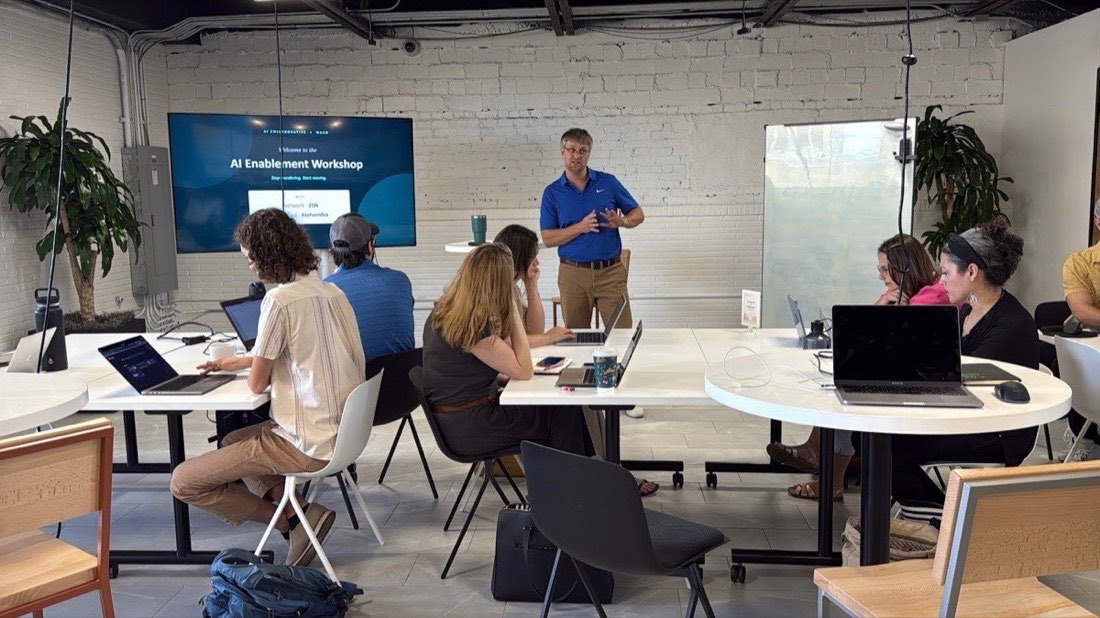
The first AI Collab workshop ran June 25 and 26 at 25N Coworking in downtown Waco. Two afternoons, hands-on, with tables grouped by skill level so builders worked with builders and operators worked with operators. Half of it was teaching. The other half was guided working time on the attendee's own business, which is where the useful part happened.

  • Format Eight hours across two afternoons, with guided working time on real problems.
  • Group Small tables by experience level, with guide support kept close.
  • Focus AI fundamentals, data safeguards, workflow fit, and a next-step plan.

The agenda

What we actually ran, block by block

Day one, Thursday June 25

  1. 1:00 Framing the why. Who built this, and the crawl-walk-run shape of the two days.
  2. 1:20 Building your table. A structured mixer so the peer work later actually works.
  3. 1:45 Foundations. What AI is and is not, in plain language. Model, prompt, token, context window.
  4. 3:00 Lab one, your first useful prompt. Everyone picks a tedious weekly task and rebuilds it.
  5. 4:00 Lab two, the safety scan. A decision framework for company, client, and proprietary data.
  6. 4:50 Wrap and homework.

Day two, Friday June 26

  1. 1:00 Kickoff and homework share-outs. One win, one thing that did not work.
  2. 1:10 Pick your path, round one. Five tracks, self-selected by role and by the problem you brought.
  3. 2:45 Governance, budgets, observability. What tokens actually cost, in plain English.
  4. 3:25 Pick your path, round two. Go deeper or pivot, applied to your own situation.
  5. 4:40 Your AI first 30. Three changes and the first Monday action, written down.

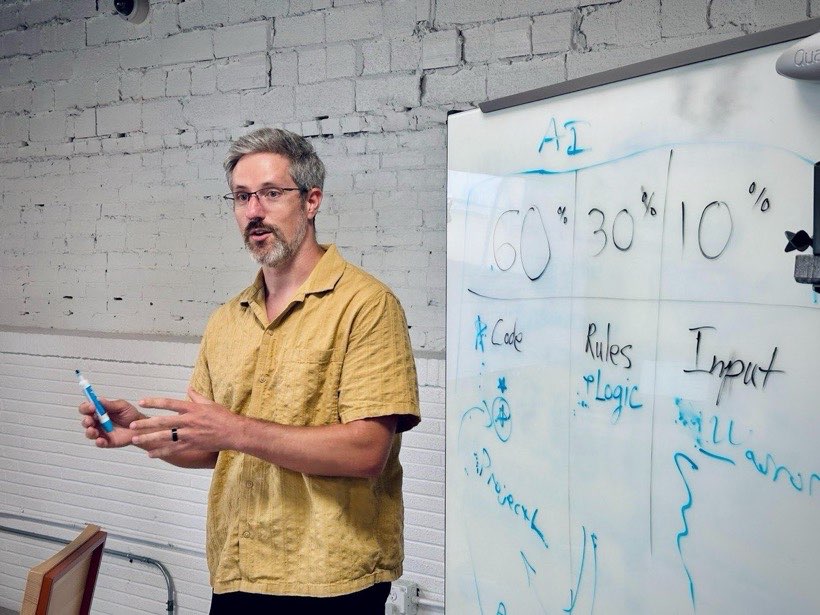
The spine under all of it was one ratio on the whiteboard: 60 / 30 / 10. Sixty percent of the result comes from the files you feed the thing, thirty percent from the rules you give it, ten percent from the model's own judgment. Most people spend all their energy on the ten percent.

What people left with

A seat came with work product, not a workbook.

I am not going to publish anyone's files. They belong to the people who built them. Here is what the shape of a leave-behind is, so you know what a seat buys.

Your own AI workspace

Not notes. A folder that carries your business: who you are, how you work, the projects you are running, and what the assistant already learned about you. Your AI reads it before it answers anything.

Your AI opportunity map

A one-pager built in the room off your own intake. Three rungs, from the chat box to a system that keeps watch, and what each rung unlocks in your job specifically. Not a generic ladder.

Real work, finished in the room

Not exercises. Sourced market research, pricing guardrails, and ranked lead lists with names, titles, and where to go meet them. Sitting in the attendee's own folder when they walked out the door.
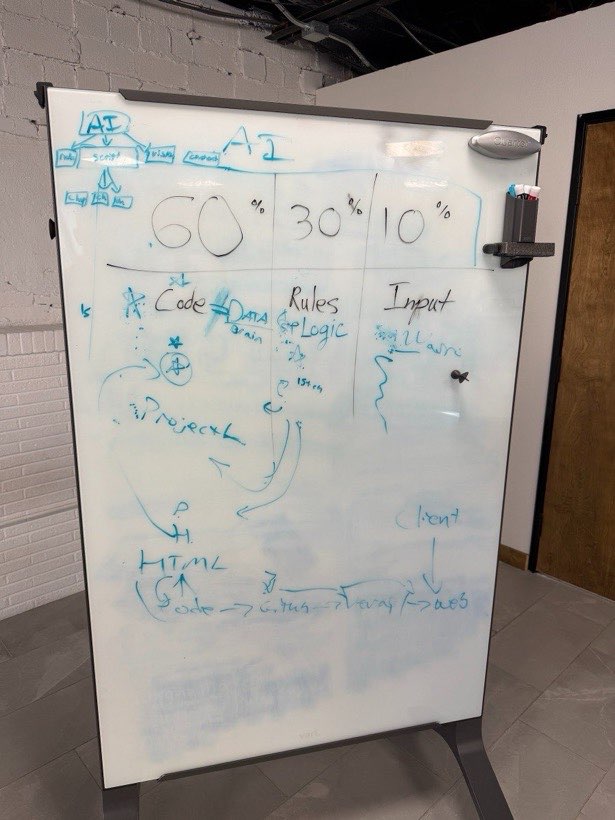
Workshop whiteboard showing the 60 / 30 / 10 split across code, rules and logic, and input
The whole method, on a whiteboard in Waco. 60 percent files, 30 percent rules, 10 percent judgment.

Case study

A case study is in the works

The research was done during the workshop, on their own business, with them driving. The revenue came after. I am writing that one up properly, in their words and with their sign-off, rather than characterizing it for them here.

Full case study coming soon.

The room
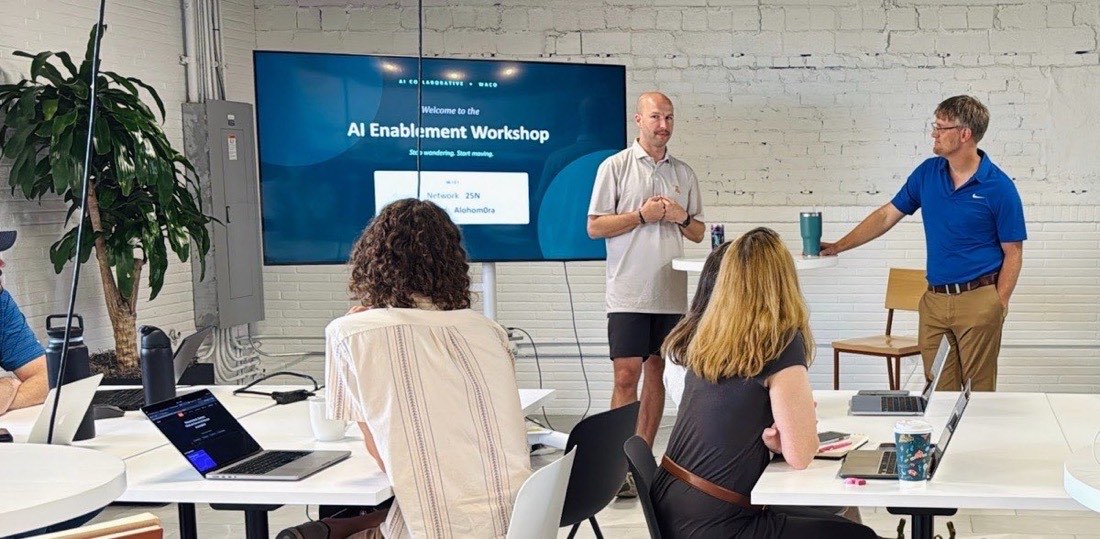
Two afternoons in downtown Waco.

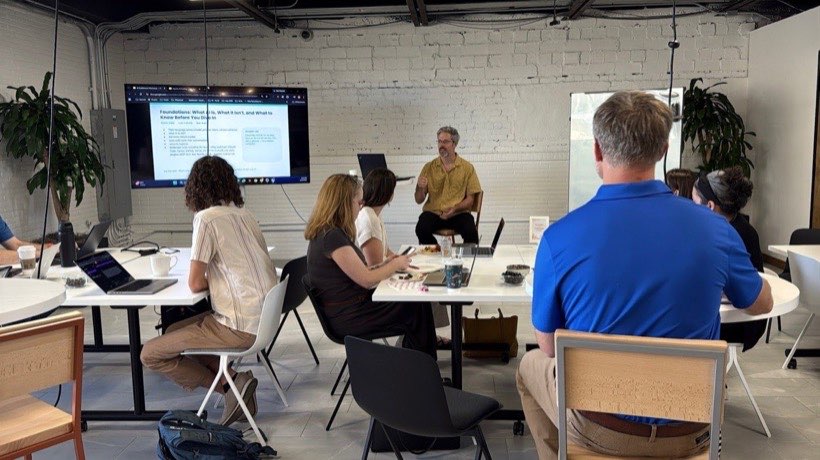
Attendees seated at tables facing the opening slide of the AI Enablement Workshop
Opening session, day one.
A guide teaching at the whiteboard during the workshop
Teaching the 60 / 30 / 10 split.
Attendees working on laptops at tables during a lab block
Guided working time, not lecture time.
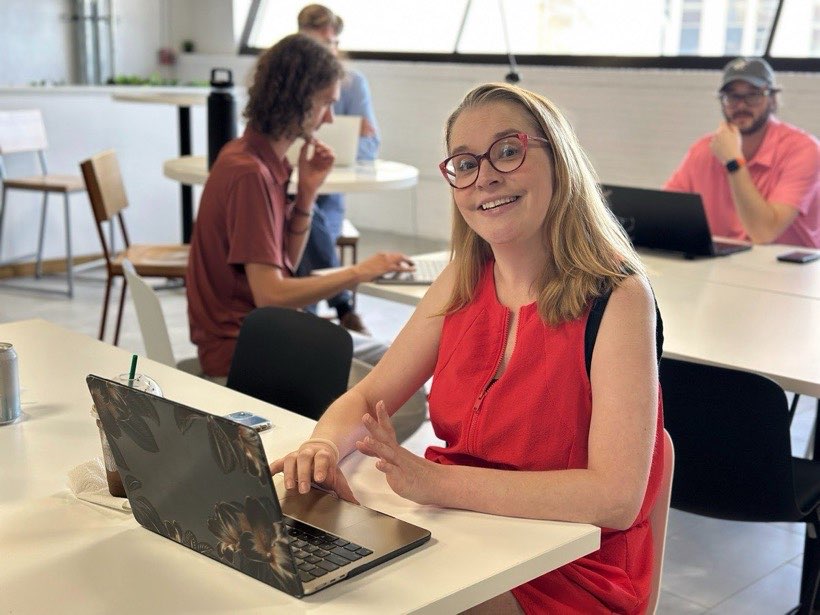
Two attendees working together at a laptop
Tables grouped by experience level.
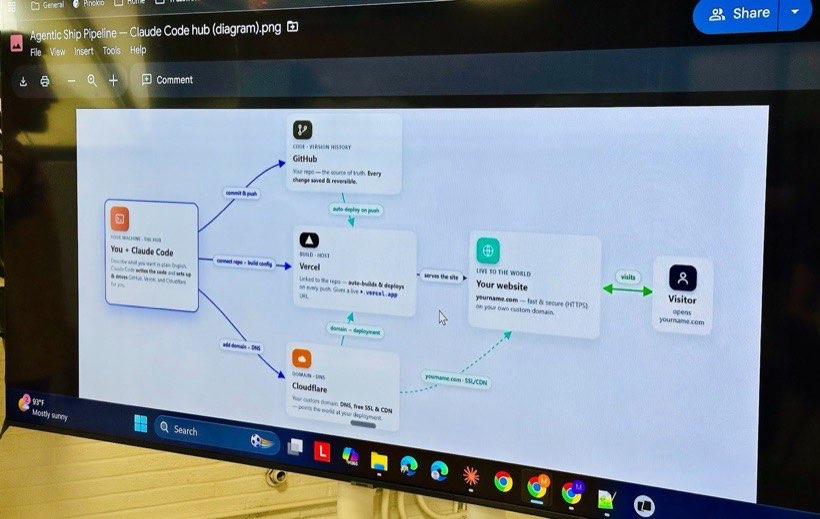
A build pipeline diagram displayed on the room screen
Real build work on the screen, day two.
Wide view of the workshop room with attendees at tables and a guide at the front
25N Coworking, Terrace room.

What I run

Two ways to get your people in the room.

Public workshops

Open-registration, hands-on workshops in downtown Waco. Small groups, mixed rooms of owners, operators, and builders. Bring your worst AI question and leave with a plan.

Private team sessions

I come to your team. A closed-door workshop built around your workflows, your tools, and your data, with the right people around the table. Scoped to what you are trying to move.

Who it is for

Built for Waco problem solvers who want usable AI.

Business leaders

Get clarity before committing team time, customer data, or budget to a new AI workflow.

Operators and contributors

Learn where AI can multiply output while keeping judgment, quality, and role safety in view.

Builders and developers

Pressure-test early AI projects against fundamentals, security practices, and scalability questions.

What is next

Three ways in, and none of them are a waiting list.

The next public round is being scheduled. You do not have to wait for it to get the part that mattered most to the June room.

The Company OS install

The part of June I keep getting asked about is watching your own business get built into a structure the AI reads before it answers. I do that one-on-one now, in a 90 minute session, on whichever engine you already pay for. You keep the files. There is a follow-up 30 days later.

The next public workshop

Same format as June. Small room, tables by experience level, guided working time on your own problem. Get on the list and you hear the date first.

A private session for your team

I come to you. Closed door, built around your workflows, your tools, and your data, with the right people at the table. Scoped to whatever you are trying to move.